From your first breath
to the technical descent.
An independent guide to scuba cylinders, valves and configurations — and the complete Sopras range for recreational and technical diving.
What a scuba cylinder actually is
A cylinder stores compressed breathing gas — air, nitrox or trimix — at 200 to 300 bar and releases it on demand through the regulator. Three parts do the work.
The cylinder body
Chromium-molybdenum steel (EN 1964) or 6061 aluminium. The shoulder is stamped with capacity, working pressure, test pressure and the date of the last hydrostatic test.
The valve
The high-pressure gate between the stored gas and the regulator. It carries the connection standard — DIN or A-clamp — and an on/off spindle.
The burst disc
A one-way safety relief inside the valve. If pressure climbs above the rating — overfill, fire, a hot car — it vents instead of letting the cylinder fail. It is matched to the working pressure and never interchangeable.
Four parameters
decide everything
Work through them in order — from how much gas you breathe to which thread fits your first stage.
Volume
12 L is the European recreational standard. Higher consumption or longer dives move you to 15 or 18 L; 20 L is the largest single steel cylinder.
Pressure
200 / 232 / 300 bar. Higher pressure stores more gas in a smaller body — a 10 L 300 bar holds what a 15 L 200 bar does — but your fill station must match it.
Material
Steel stays negatively buoyant throughout the dive. Aluminium is lighter and non-magnetic, swinging slightly positive when empty — ideal for stage and deco bottles.
Valve
DIN or A-clamp, one port or two, nitrox-clean or standard. The thread and connection have to match your regulator and your fill station.
Steel & aluminium
for everyday diving
The 12-litre 232-bar steel cylinder is the European standard — filled at virtually every dive centre on the continent. The full SoprasSub range runs from 1 to 20 litres, plus aluminium for travel and non-magnetic use.
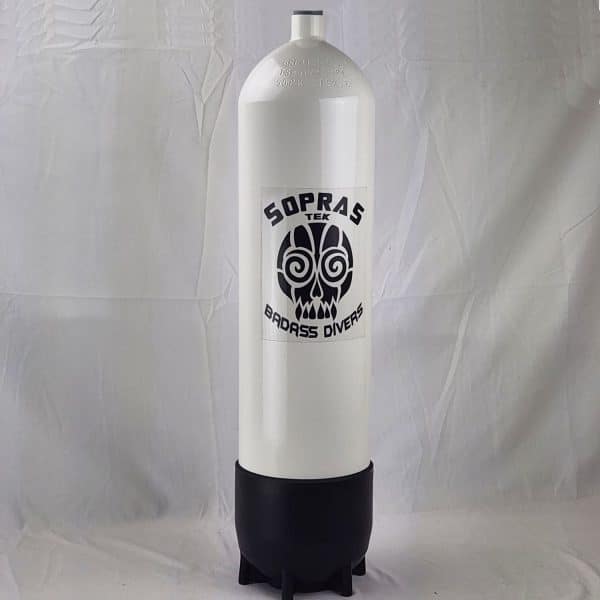
Tank 12 L · ⌀171 mm
| Cylinder | Capacity | Pressure | Price | SKU | ||
|---|---|---|---|---|---|---|
 | Tank 1 L ⌀82.5 mm | 1 L | 232 bar | €138 | 701000 | View → |
 | Tank 3 L ⌀100 mm | 3 L | 232 bar | €162 | 703199 | View → |
 | Tank 5 L | 5 L | 232 bar | €208 | 705213 | View → |
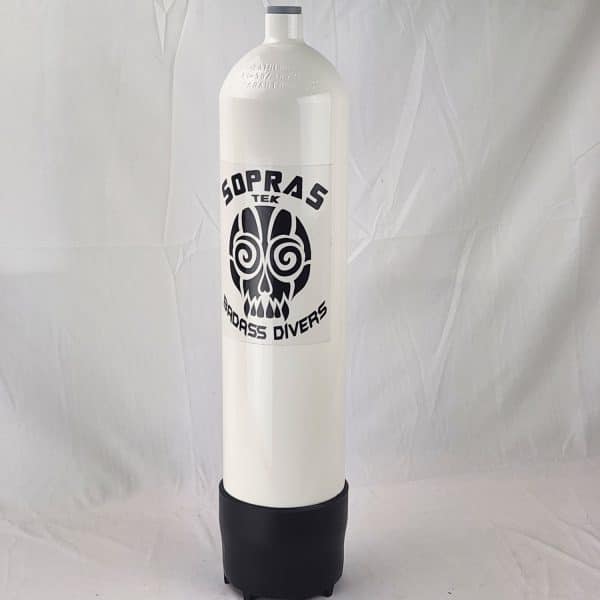 | Tank 7 L | 7 L | 232 / 300 bar | €215–246 | 707312 | View → |
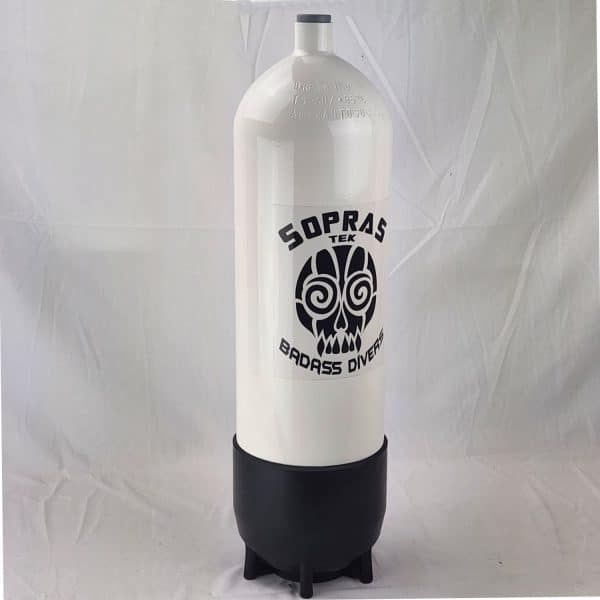 | Tank 10 L | 10 L | 200 / 232 / 300 bar | €231–292 | 710235 | View → |
| Tank 12 L ⌀171 mm | 12 L | 200 / 232 / 300 bar | €254–350 | 712235 | View → |
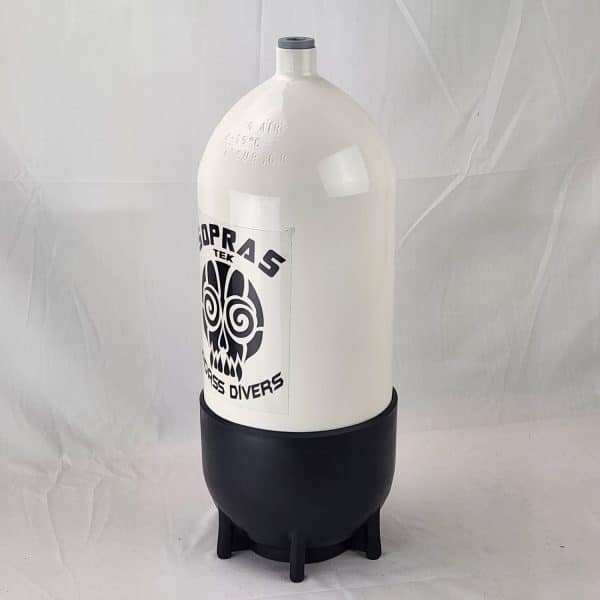 | Tank 12 L ⌀203 mm | 12 L | 200 / 232 bar | €254–262 | 712237 | View → |
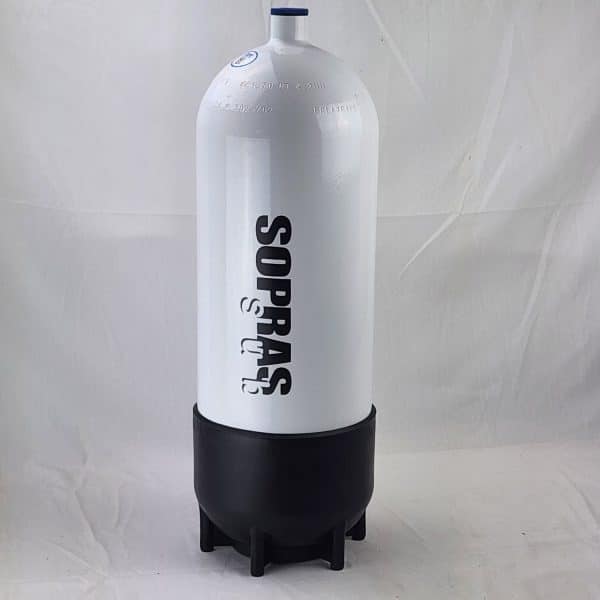 | Tank 15 L ⌀203 mm | 15 L | 200 / 232 bar | €274–282 | 715233 | View → |
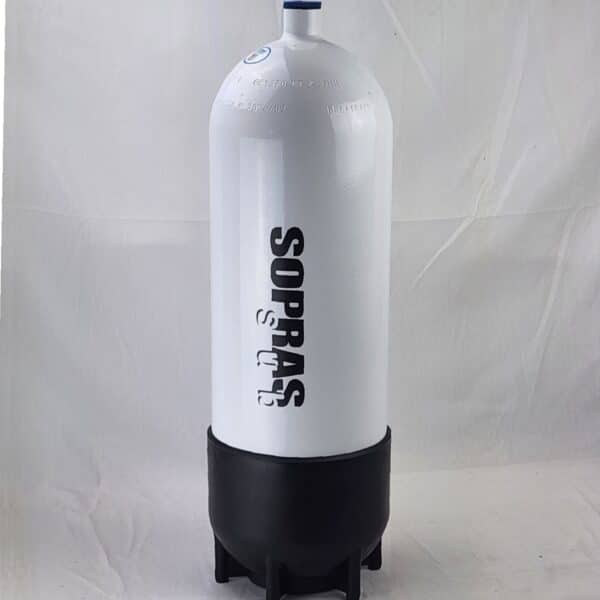 | Tank 18 L ⌀203 mm | 18 L | 200 / 220 / 232 bar | €310–369 | 718207 | View → |
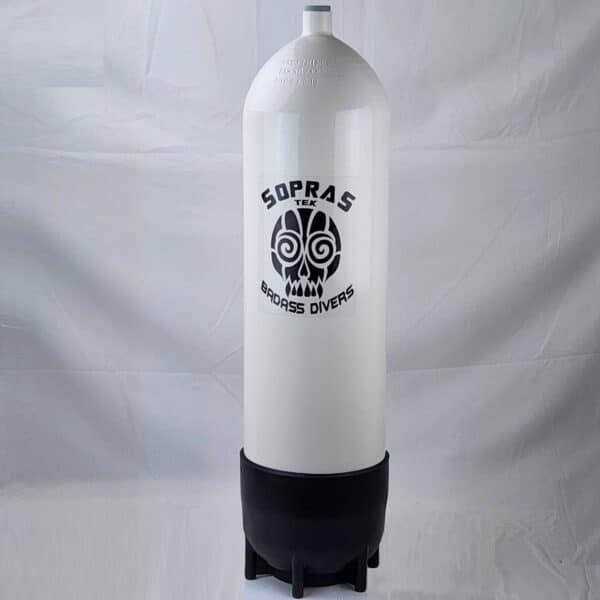 | Tank 20 L ⌀203 mm | 20 L | 232 bar | €508 | 720010 | View → |
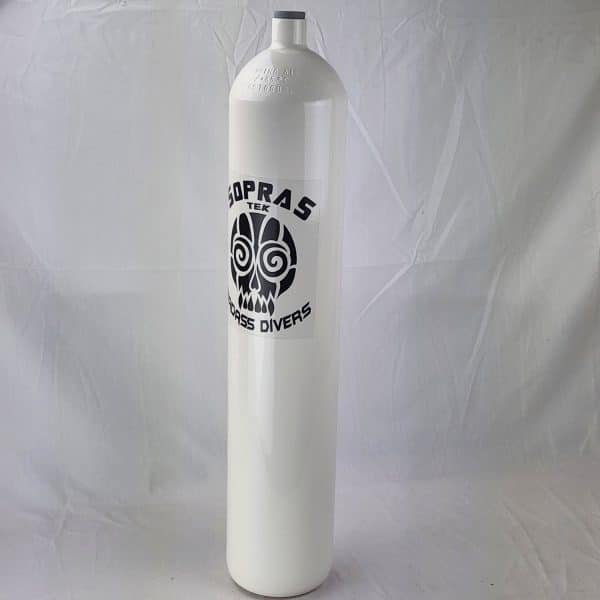 | Tank 8.5 & 12 L concave | 8.5 / 12 L | 232 bar | €246–285 | 725008/12 | View → |
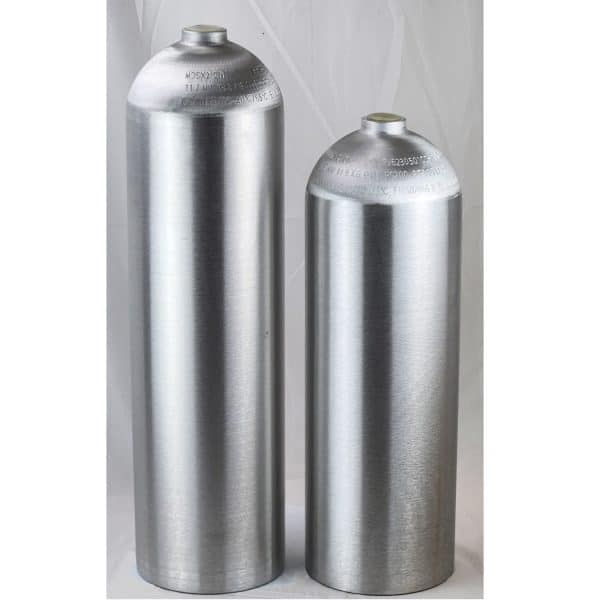 | Aluminium S80 & S63 | 11.1 / 8.9 L | 200 bar | €227–243 | 720063/111 | View → |
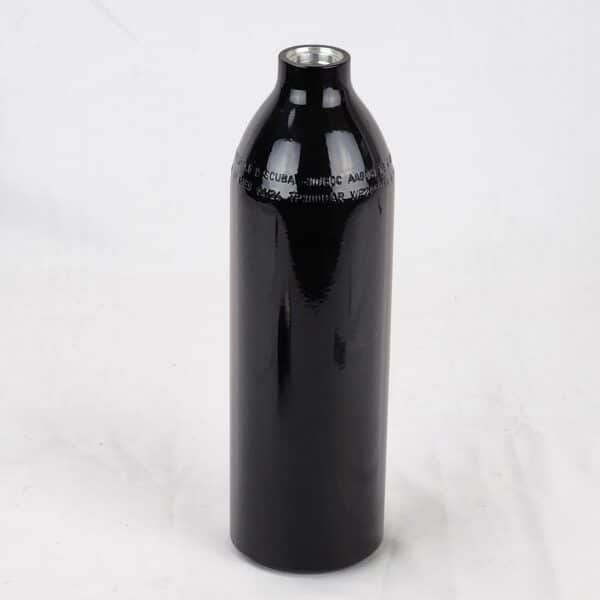 | Aluminium cylinder 0.5 L | 0.5 L | M18×1.5 | €100 | 720259 | View → |
Cylinders are sold as bodies only — valves are a separate item. The valve range covers single-port Z valves, dual-port H/V valves and modular manifold parts (24 in total).
Manifolds, twinsets
& stage rigging
Technical diving is built on redundancy. The isolation manifold is the defining piece — it joins two cylinders and lets you shut off one side if a valve, hose or first stage fails, preserving the gas in the other.
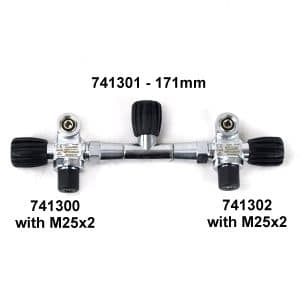 Backmount doubles
Isolation manifolds
232 and 300 bar, ISOL and screw formats, sized to your cylinder diameter (171 / 203 mm). The central isolation valve is the core safety component of a double set.
 Ready to dive
Twin tank sets
Matched cylinders, manifold and stainless bands assembled to spec — a complete configured double set out of the box.
€645 – 856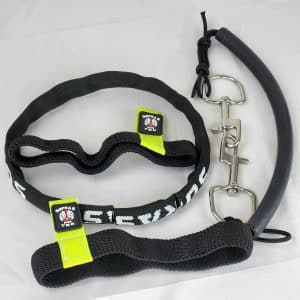 Stage & sidemount
Bottle rigging
Two-point rigging — bolt snap at the neck, bungee at the base — sized for 130–160 mm cylinders, plus dedicated sets for 7 L/S40, 10–12 L steel and S80.
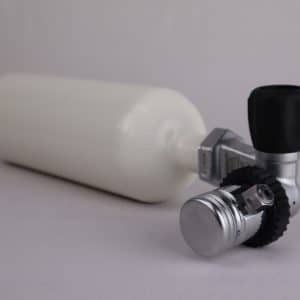 Dry suit inflation
Argon systems
1 L and 3 L cylinder holders, the argon valve in M18×1.5 and G 5/8″, and complete argon sets — cylinder, valve and regulator.
€216 – 220Keep your cylinder in service
A pressure vessel is only as safe as its last inspection. Three habits keep yours fillable and legal.
Upright, with residual pressure
Keep 20–30 bar inside so moisture and contaminants can’t enter through the valve. Never store fully pressurised in a hot car.
Fresh water after salt
Rinse the cylinder and valve after every salt-water dive. Don’t immerse an open valve with the regulator removed — water gets into the seat.
Hydro every five years
Steel cylinders are hydrostatically retested on the EN 1964 schedule, typically every five years, with a visual inspection in between. An expired stamp means no fill.
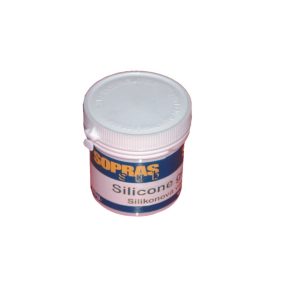
The care kit
Before you buy
200, 232 or 300 bar — what’s the difference?
Working pressure is the maximum fill pressure of the cylinder. The higher it is, the more gas fits in the same physical size: a 12 L holds 2,400 L at 200 bar, 2,784 L at 232 bar and 3,600 L at 300 bar. The catch is your fill station — a 300 bar cylinder only reaches its capacity at a 300 bar compressor, and the valve’s burst disc must match the cylinder. Never fit a 232 bar valve to a 300 bar cylinder, or the reverse.
DIN or A-clamp?
They are the two regulator-to-valve connections. DIN screws the regulator into the valve with the O-ring captured inside — stronger, rated to 300 bar, and the standard for technical diving. A-clamp (yoke) clamps over an external port and is common on recreational hire gear, generally up to 232 bar. If you dive both, choose a DIN valve and carry a DIN-to-A-clamp insert rather than the other way around.
What size cylinder do I need for recreational diving?
The 12 L 232 bar is the European default and suits most divers to 30–40 m on single dives. If you breathe harder, dive deeper within the recreational range, or want longer bottom times, step up to 15 or 18 L. The 20 L is the largest single steel cylinder and crosses into light technical use.
Steel or aluminium?
Steel stays negatively buoyant the whole dive and carries more gas at higher pressure — the standard for backmount and back gas. Aluminium is lighter, corrosion-resistant and swings slightly positive when nearly empty, which makes it ideal as a stage, deco or bailout bottle. Many technical divers run both in one configuration.
Are tanks sold with valves included?
No — cylinders are sold as bodies only, so you can choose the exact valve type, port count, thread and pressure rating for your regulator. The valves are a separate category. If you’re unsure which valve matches a given cylinder, ask before ordering.
Can I use a cylinder for nitrox?
Yes, with two conditions. For oxygen content above 21% the cylinder must be oxygen-clean inside and the valve oxygen-rated, and it must carry the nitrox markings — the green-and-yellow band and the EAN label. Most fill stations want a valid oxygen-cleaning certificate before filling nitrox.