How to choose a cylinder
Four parameters decide everything — volume, pressure, material and valve. Work through them in order, or use the recommender to get a starting point in seconds.
Get a recommendation
A starting point, not a prescription — confirm with your instructor, your fill station and a proper weight check.
The four parameters, in order
Volume
12 L is the European standard. Higher consumption or longer dives move you to 15 or 18 L. Small 1–7 L sizes are for pony, sidemount or argon.
Pressure
200 / 232 / 300 bar. Higher pressure = more gas in a smaller body — but only if your fill station can reach it. 232 is the everyday standard.
Material
Steel for back gas — negative throughout, more capacity. Aluminium for stage and travel — light, non-magnetic, positive when empty.
Valve
DIN or A-clamp, one port or two, air or nitrox-clean. The connection and thread have to match your regulator.
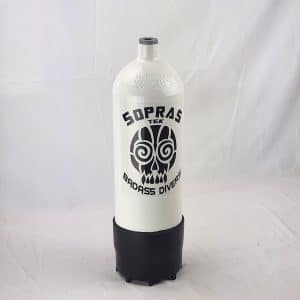
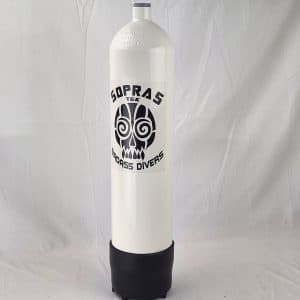
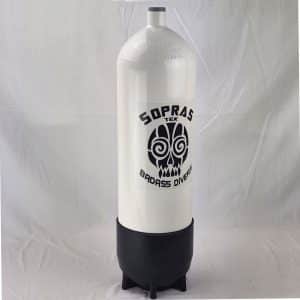
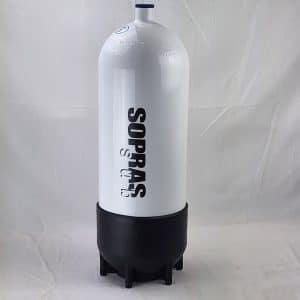
From 5 to 18 litres

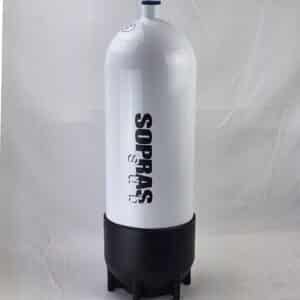
Will it last your dive?
Gas available = capacity × fill pressure. A 12 L at 232 bar holds about 2,784 L of free gas. The depth then sets how fast you use it: at 20 m you’re breathing at roughly three times the surface rate.
If you regularly surface with less reserve than you’d like, that’s the signal to size up — to a 15 or 18 L, a higher fill pressure, or a twinset.
Steel vs. aluminium →