- Argon insulates better than air, keeping you warmer in a dry suit.
- A dedicated argon bottle keeps suit gas separate from your breathing supply.
- The system is a small cylinder, a dedicated regulator and a suit inflation hose, in a holder.
- Argon is for suit inflation only — never breathe it.
Why a separate gas for the suit?
A dry suit needs a little gas added on descent to offset suit squeeze and provide insulation. Many recreational divers inflate from their back gas via a low-pressure hose. Technical divers often carry a separate, dedicated argon bottle instead — for two reasons.
First, insulation: argon is denser and less thermally conductive than air, so it insulates better and keeps you warmer on long, cold dives. Second, gas separation: routing suit gas from a dedicated bottle keeps it off your back-gas supply. This matters most when the back gas is a helium mix — helium conducts heat readily, so inflating a suit with trimix would chill you. A separate argon system sidesteps that entirely.
Is it worth it for you?
For warm-water or short dives, back-gas suit inflation is usually fine. Argon earns its place on long, cold or deep dives — especially trimix dives, where it’s close to standard. If you’re diving a dry suit in cold water for extended bottom times, a dedicated argon system is a meaningful comfort and safety upgrade.
Gear in this article
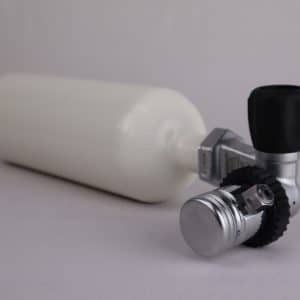 SoprasTekArgon tanks set€216 – 220
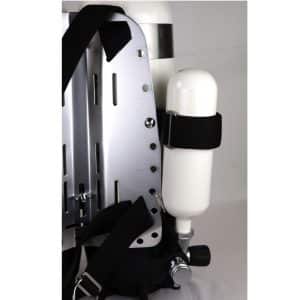 SoprasTekArgon tank holder 1l€25
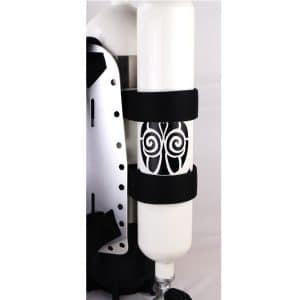 SoprasTekArgon tank holder 3l€34
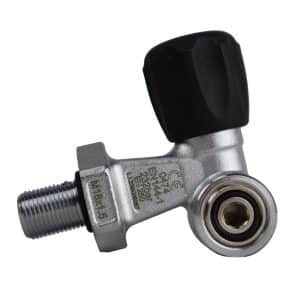 SoprasTekLeft Z valve M18x1,5€61