- DIN screws into the valve with the O-ring captured inside — stronger, rated to 300 bar.
- A-clamp (yoke) clamps over an external port — common on recreational hire gear, generally to 232 bar.
- A DIN-to-A-clamp insert lets a yoke regulator use a DIN valve — so DIN is the more flexible choice.
- If you dive both, pick a DIN valve and carry an insert, not the reverse.
Two ways to hold one O-ring
Both connections seal with a single O-ring. The difference is how that O-ring is held — and that drives everything else about strength and pressure rating.
In a DIN connection (EN 144), the regulator’s first stage has a threaded insert that screws directly into a threaded bore in the valve, compressing an O-ring captured inside the connection. In an A-clamp connection (also called INT or yoke), the O-ring sits in a groove on the valve’s external port face, and the regulator’s yoke clamps over it mechanically.
DIN (EN 144)
- Regulator screws in; O-ring protected inside
- Rated to 200 / 232 / 300 bar
- Mechanically stronger
- Standard for technical and 300 bar diving
A-clamp (yoke / INT)
- Yoke clamps over an external port
- Generally limited to 232 bar
- Quick to connect, no threading
- Common on recreational hire regulators
Strength and pressure
Because the DIN O-ring is captured and the regulator is threaded into the valve, the connection is more robust and less exposed to a knock dislodging the seal. That’s why DIN is the standard for technical diving and the only option at 300 bar. A-clamp is simpler and faster to clip on, which is part of why it remains common in recreational dive centres and on hire gear worldwide — but it tops out around 232 bar.
One detail catches people out: DIN bores come in two depths. A 200/232-bar valve has a 5-thread bore; a 300-bar valve has a deeper 7-thread bore. A 300-bar regulator insert fits both, but a 200-bar insert won’t reach a 300-bar bore. If you plan to dive 300-bar cylinders, confirm your regulator has a 300-bar DIN insert.
If you dive both — and most travellers do
Here’s the practical rule: choose a DIN valve and carry a DIN-to-A-clamp insert adapter. The insert drops into the DIN bore and turns it into a yoke port, so a hire A-clamp regulator can connect when you need it. Going the other way — owning A-clamp gear and trying to use DIN cylinders — is far more awkward. DIN is the stronger, more flexible foundation.
Gear in this article
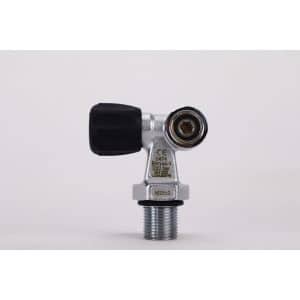 SoprasSubLeft Z Valve€57
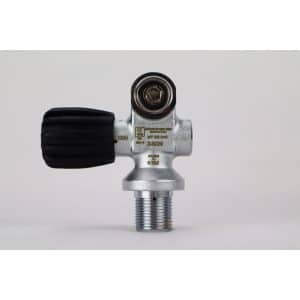 SoprasSubLeft Z valve II EN 144€57
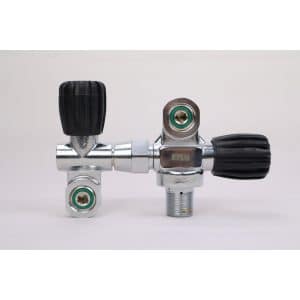 SoprasSubRight H Valve EN 144€114
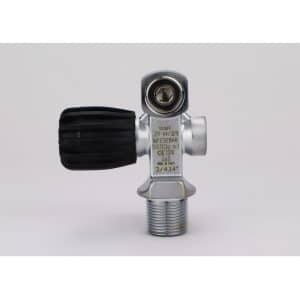 SoprasSubLeft Z valve 3/4NPSM€64