- The shoulder shows working pressure, test pressure, water capacity, maker/standard and test date.
- Test pressure is typically 1.5× working pressure (348 bar for a 232).
- An expired hydrostatic test date means a commercial station can’t fill it.
- Always read the stamps before buying a used cylinder.
Everything is stamped on the shoulder
Steel cylinders are marked to EN 1964, and that marking is the first thing to check before buying or filling one. It’s stamped into the metal at the shoulder, just below the valve. Here’s what each part means.
- Manufacturer & standard — the maker’s mark and EN 1964
- Working pressure — the maximum fill pressure (e.g. 232 bar)
- Test pressure — the hydraulic test, typically 1.5× working
- Water capacity — the volume in litres
- Hydro test date — the date of the last hydrostatic test
- CE mark — conformity for sale in the EU
The two numbers that keep you legal
The working pressure tells you how much you can fill the cylinder — and never to exceed it. The test date tells you whether it’s currently within its inspection interval. Steel cylinders are hydrostatically retested on the EN 1964 schedule — typically every five years — with a visual inspection in between. A cylinder past its test date can’t be filled at a commercial station until it’s retested.
Don’t obscure them
Never paint over, grind or cover the shoulder stamps. They’re the legal record of the cylinder’s rating and test history — an inspector or fill operator needs to read them, and an unreadable cylinder won’t get filled.
Gear in this article
 SoprasSubTank 12l diam.171mm 200bar, 232 or 300bar€254 – 350
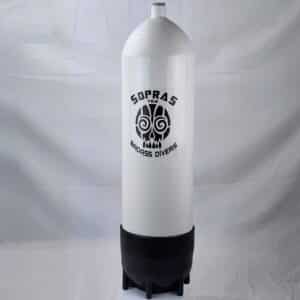 SoprasSubTank 20l diam.203mm 232 bar€508
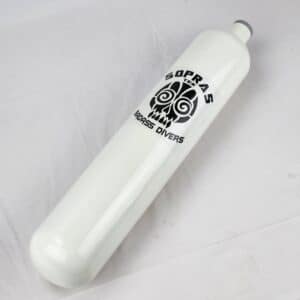 SoprasSubTank 3l diam.100mm 232 bar€162