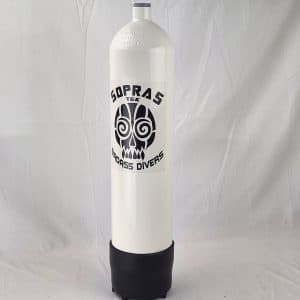
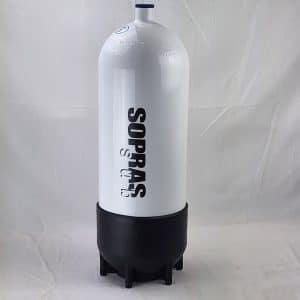
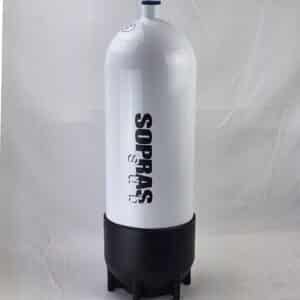
- The 12 L 232 bar steel cylinder is the European default and fits most recreational divers.
- Gas available = capacity (litres) × fill pressure (bar). A 12 L at 232 bar holds about 2,784 L.
- Higher consumption, deeper or longer dives → step up to 15 or 18 L, or a twinset.
- Small 1–7 L cylinders are for pony, sidemount or dry-suit argon — not main gas.
Start with the standard
If you’re buying your first cylinder, a 12-litre steel cylinder at 232 bar is the safe default. It’s the size virtually every European dive centre fills, it suits most divers on single dives to 30–40 metres, and almost all rental and instruction gear is built around it. Unless you have a specific reason to go bigger or smaller, this is your answer.
The number behind the size
The gas you carry is simple maths: capacity in litres × fill pressure in bar. A 12-litre cylinder filled to 232 bar holds roughly 2,784 litres of free gas at the surface. A 15-litre at the same pressure holds about 3,480 litres — a meaningful jump in bottom time.
What complicates it is depth. At 20 metres you’re under three times the surface pressure, so each breath takes about three times the gas. That’s why a tank that lasts an hour in a shallow pool empties far faster on a real dive.
Match the size to your diving
| Size | Best for | Typical role |
|---|---|---|
| 10 L | Compact dives | Shorter, shallower dives or low air consumption |
| 12 L | The standard | Most recreational divers, single dives to 30–40 m |
| 15 L | More bottom time | Higher consumption, longer or deeper recreational dives |
| 18–20 L | Long & deep | High consumption, extended range, light technical |
| 1–7 L | Support gas | Pony / bailout, sidemount, dry-suit argon |
When to size up
The clearest signal is your own gauge. If you regularly end dives with less reserve than you’re comfortable with — while your buddies still have plenty — you’re a candidate for more gas. You have three ways to get it: a larger cylinder (15 or 18 L), a higher fill pressure (300 bar, if your fill station supports it), or a twinset for technical diving.
Sizing up has a cost beyond price: bigger steel cylinders are heavier and shift your trim. It’s worth trying a 15 L on a dive or two before committing.
Don’t oversize either
A cylinder that’s larger than you need is heavier to carry, harder to travel with, and changes your weighting. If a 12 L comfortably covers your dives with a healthy reserve, there’s no prize for carrying more.